Governor Gretchen Whitmer’s FY ’26-’27 Executive Budget Recommendation was presented to a joint meeting of the Michigan Senate and House Appropriations Committees.
The $88.1 billion budget ($13.6 billion General Fund) includes limited tax relief, some tax and fee increase requests, a pull from reserves and limited new spending, mostly targeted at education programs. The new revenue would come from new or increased taxes levied on tobacco, vaping devices, digital advertising and changes to the online gaming tax structure.
There are new requirements outlined by the federal government regarding Medicaid and Supplemental Nutrition Assistance Program work requirements, twice-yearly redeterminations for Medicaid and an increase in the cost share for SNAP from 50% to 75%–all at an estimated cost of $186.6 million.
Some highlights in the governor’s budget proposal that align with UWSCMI policy and budget priorities:
Health and Human Services
- $20 million in ongoing TANF funding to continue support for Rx Kids
- $116.2 million in funding to continue the Healthy Moms, Healthy Babies program
- $780.4 million to stabilize Medicaid funding through new revenues including $232 million from increasing the state’s tobacco tax rate and $73.6 million from taxing vaping and non-tobacco nicotine products
- $91.9 million to support changes to Medicaid and the Supplemental Nutrition Assistance Program to comply with federal H.R. 1 requirements.
- $351.8 million to preserve and raise direct care worker wages
- $21.4 million directed to cancer prevention, smoking and vaping cessation, and mental/behavioral health support for Michigan children through the Healthy Michigan Fund from a portion of vape tax revenues.
- $72.2 million to expand behavioral health care and capacity through the new state psychiatric hospital, which is anticipated to open in October.
Education
- $2 million investment in the autism navigator program
- $200 million to continue free school meals for all
- $300 million to support student wellness through continuation of mental health and safety grants to districts
- $100 million increase in funding for the Michigan Achievement Scholarship and Community College Guarantee, for a total of $532 million.
- $67 million allocated for Michigan Reconnect, including $25 million earmarked for expansion to lower the eligibility age from 24 to 21.
- $10 million in funding for FAFSA completion efforts.
- $48.3 million allocated for Promise Zones, an increase of $5 million.
- Additional $325 million to increase the K-12 per-pupil foundation allowance by $250 per pupil, a 2.5% increase, for a total of $10,300 per pupil.
- Additional $128 million to increase K-12 weighted foundation payments by 6%. This includes funding for academically at-risk students, CTE students, and rural students, as well as funding for intermediate districts. Also included, $28 million for workforce development programs, and youth exploration of career pathways and programs that lead to a skilled credential;
- $20 million to encourage more K-12 students in areas with high concentrations of poverty to work toward receiving college credit through dual enrollment opportunities.
- $63.3 million to support CTE and early/middle college programs.
Early Learning
- Increased investments for PreK for All, which includes a 6% increase to the Great Start Readiness Program per pupil rates and continuing to invest $25 million for start up and expansion grants, which are particularly important for community-based PreK programs.
- A new $30 million appropriation to establish regional Early Learning Partnerships, which would provide central access points to early childhood services; family and community outreach to build awareness, trust, and referral networks; support early identification of developmental delays; and provide real-time insights to improve services and systems.
- A $1.5 million increase for Early On services, for a total of $25.1 million.
Financial Stability
- Continuing the Working Families Tax Credit, sending an average of nearly $3,900 in tax relief to 665,000 families.
- Rolling back the retirement tax completely, saving 500,000 seniors an average of $1,000 a year.
- Continuing tax exemptions on:
- Tips (saving 300,000 workers $400 a year),
- Overtime (saving 500,000 workers $500 a year),
- Social Security (saving 40,000 seniors $500 a year).
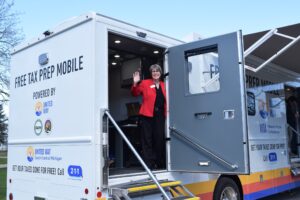
- No state funding for VITA Free Tax Preparation
Links to relevant documents
- https://www.michigan.gov/budget/budget-documents/executive-budget-and-associated-documents
- https://www.michigan.gov/whitmer/news/press-releases/2026/02/11/whitmer-budget-delivers-on-promises-to-improve-literacy-save-michiganders-money
Call to Action!
- Contact your state House and Senate members regarding your budget priorities and concerns with the budget bills. Home – Michigan Legislature
- Write
- Call
- Visit
- Participate in budget briefings by state advocacy organizations.
- Participate in advocacy days hosted by state advocacy organizations.
- Attend local coffee hours with state house and senate members
- Advanced action: Attend budget hearings and testify
- Vote and help others to register to vote. Register to vote
Have questions and request help by contacting Michele Strasz, m.strasz@uwscmi.org