The Eaton County Human Services Collaborative Council (HSCC), in partnership with the Clinton County Building Stronger Communities Collaborative (BSCC), the Ingham County Power of WE Consortium, and the Regional Housing Partnership, is proud to announce the successful launch of the Capital Cares Collaboration—a regional effort designed to strengthen connections between residents and essential community resources.
Funded through the State of Michigan Social Determinants of Health (SDOH) Hubs initiative, this project marks the first time all three county collaboratives have joined forces to build shared tools that promote equitable access to basic needs such as housing, food, transportation, and employment.
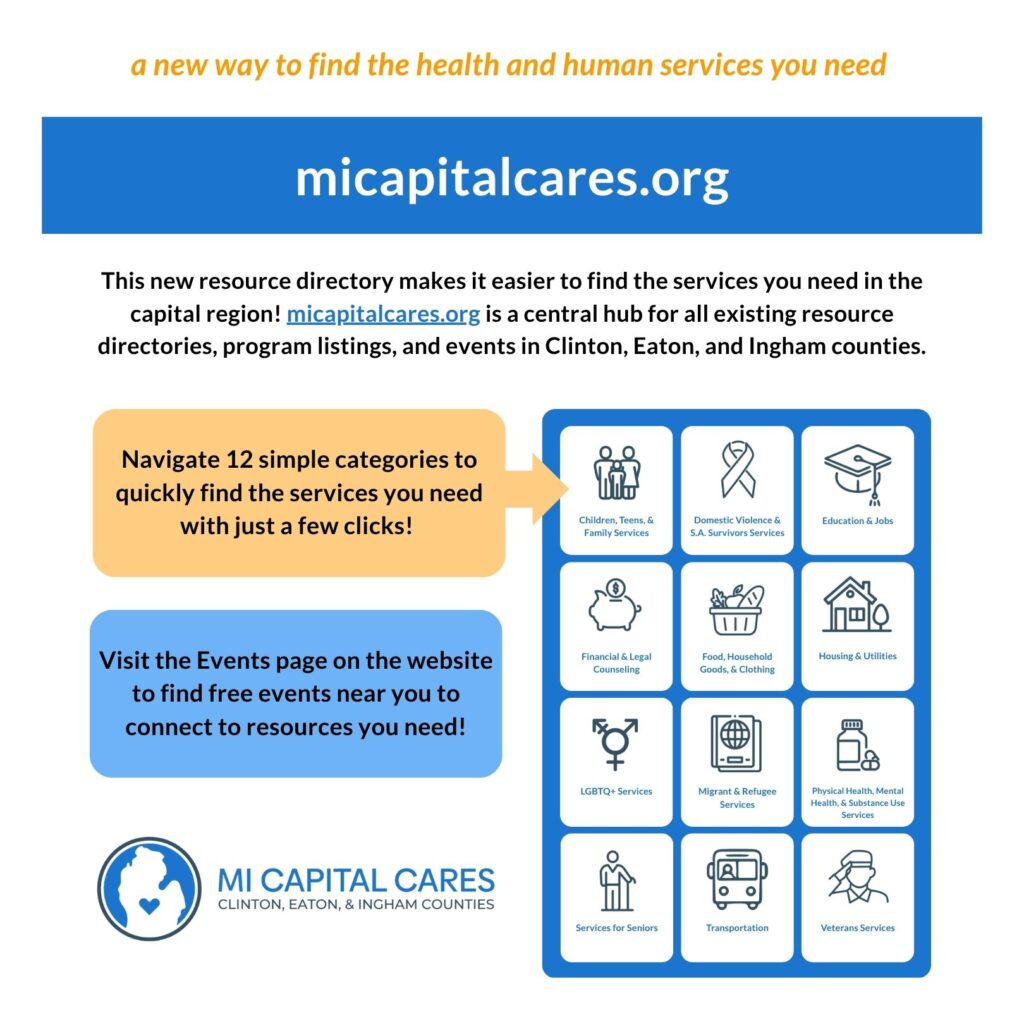
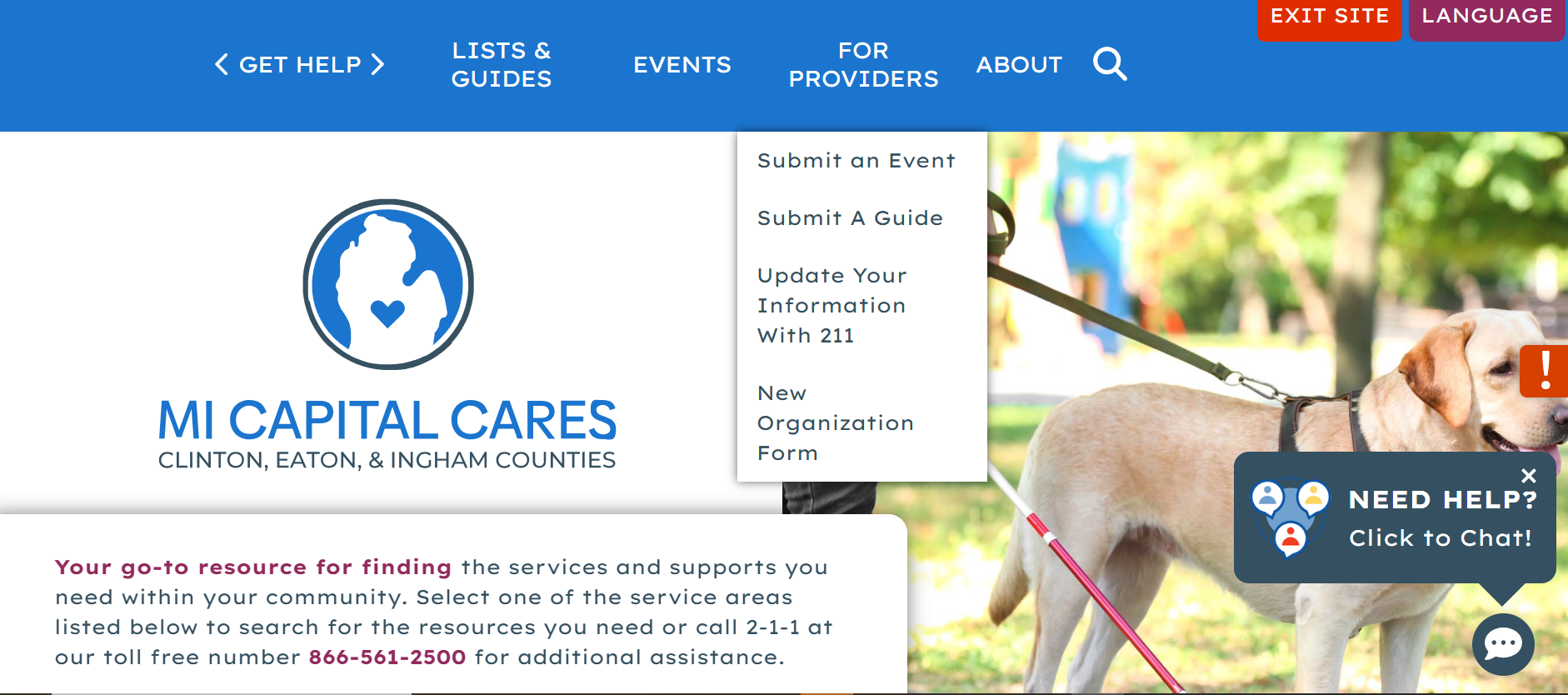
At the heart of the initiative is MICapitalCares.org, a new, user-friendly online hub developed in partnership with Central Michigan 211, and the Capital Cares Workgroup, which includes frontline workers and residents from across the tri-county region. The website makes it easier for residents and service providers to find and update local resources, post community events, and stay connected to support networks that improve well-being. UWSCMI is proud to serve as the fiduciary for the Power of We, as well as provide funding for Central Michigan 211.
“This collaboration has been about more than creating a website, it’s about creating a stronger, more connected community,” said Kalli Brady, Eaton HSCC representative.
The project also advanced regional planning for a Community Information Exchange (CIE), a shared data system that helps agencies coordinate care and track outcomes across organizations. A 22-member CIE Advisory Council representing diverse agencies met regularly to identify regional priorities, define shared goals, and evaluate potential technology platforms. The group reached consensus on a clear recommendation for the region to explore further.
Early data highlight the importance of this work: only 16% of Eaton County and 34% of Ingham County residents say it’s easy to find help, while over 70% of frontline workers report challenges with referral follow-up. The Capital Cares Collaboration directly addresses these gaps by making resource navigation simpler and supporting long-term systems change.
Visit the new community website by visiting MICapitalCares.org