PIT Count Sees Highest Total Since 2011; Collective Effort Needed to Find Solutions, Says CoC
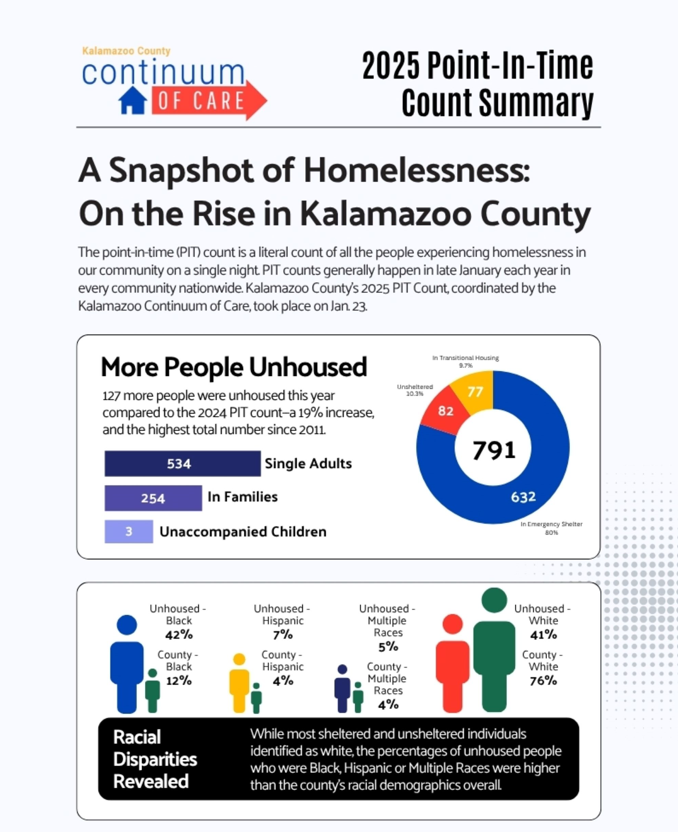
An annual one-night survey of homelessness in Kalamazoo County found 127 more people without a place to call home compared to last year’s count, reaching the highest number overall since 2011.
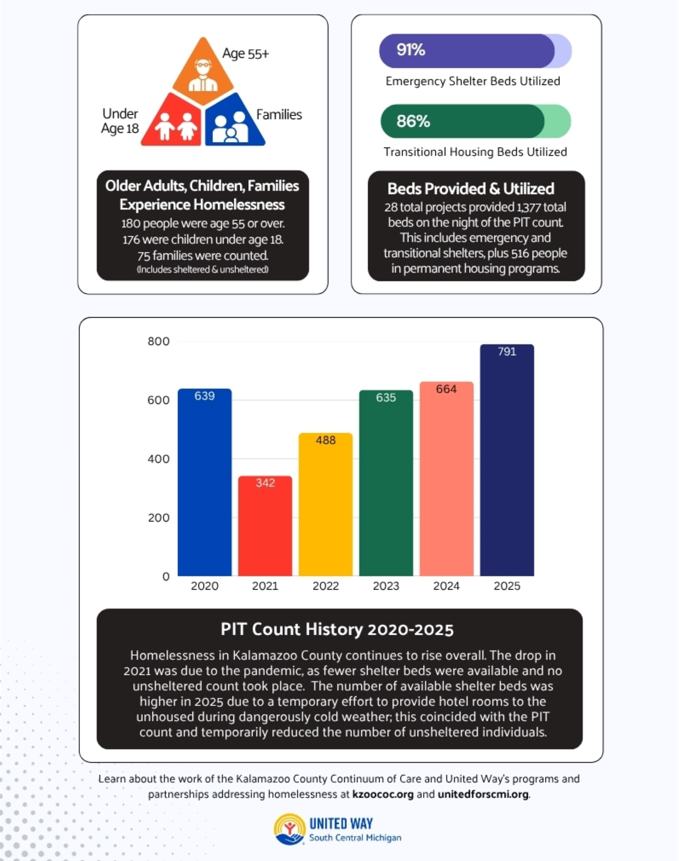
The Kalamazoo County Continuum of Care’s annual Point-In-Time (PIT) survey, which took place Jan. 23, counted 791 unhoused individuals, including 176 children. Of those counted, 709 were in shelters or transitional housing at the time, while 82 were unsheltered. That’s a 19% increase over 2024, when the survey identified 664 unhoused individuals.
“The PIT count is a snapshot of homelessness in our county,” explained Kalamazoo County CoC Director Patrese Griffin. “It helps us better understand the causes and complexity of the issue, which in turn drives effective approaches to addressing needs.”
The annual survey counts people who are in an emergency shelter, transitional housing or safe haven and would otherwise be unsheltered; and those who aren’t in a shelter and spend the night in a public place not intended for human habitation. The PIT count does not include those who stay in a friend or relative’s home.
Looking at the Numbers
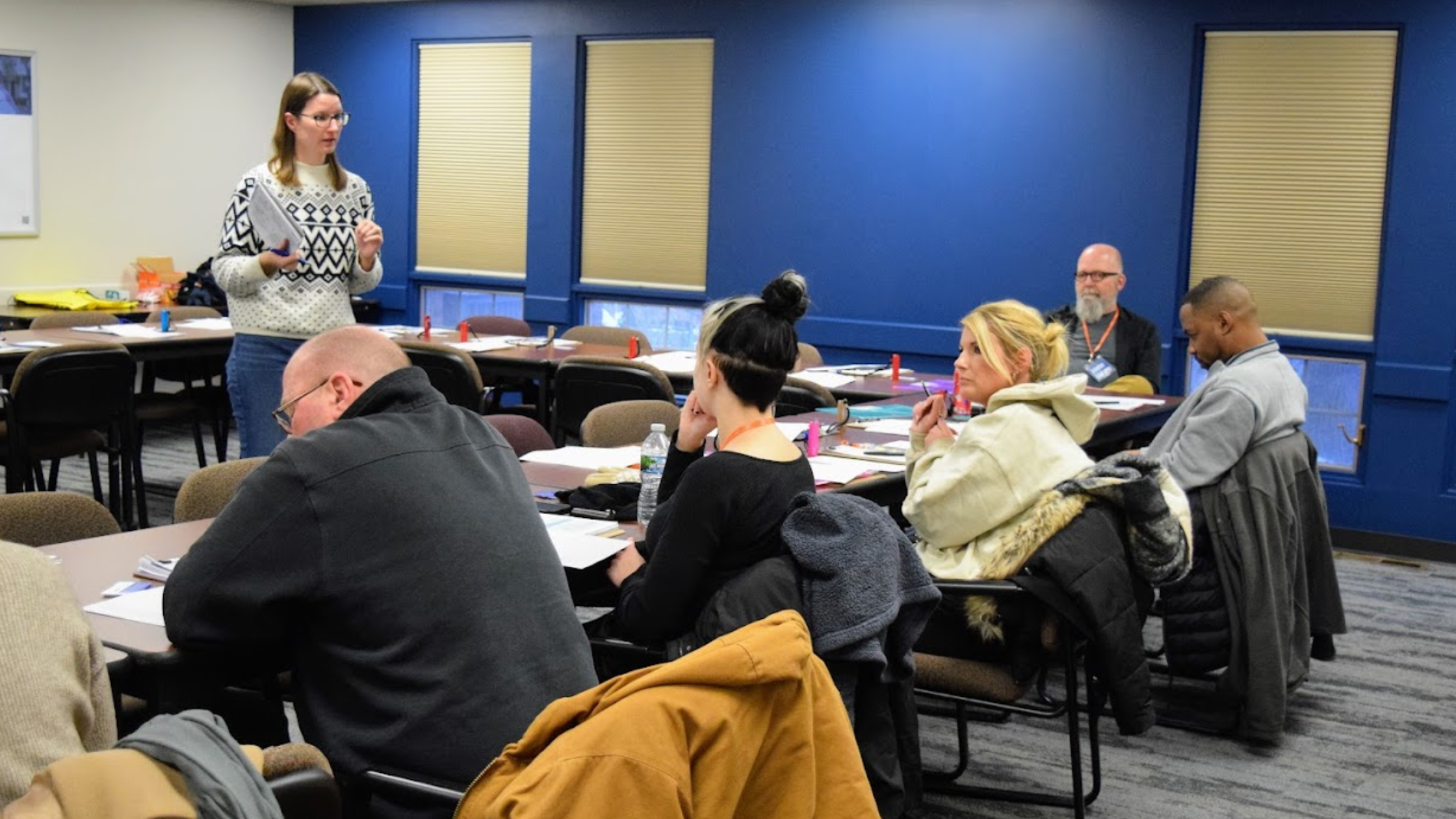
Griffin said this year’s survey involved 36 volunteers plus six experienced homeless outreach leads from Integrated Services of Kalamazoo and Recovery Institute of Southwest Michigan. After mandatory training, the volunteers went out in small groups to interview unsheltered people.
Here are key findings from the 2025 PIT survey:
- Among 709 people who were in shelters, 452 were single adults, 254 individuals were in families with children, and 3 were unaccompanied children. Another 82 individuals, all adults, were unsheltered. Last year’s survey found 542 people in shelters and 122 unsheltered.
- The oldest and the youngest comprised the largest groups of unhoused people: 22.8% were age 55 or older, and 22.3% were under age 18.
- Significant racial disparities continue to appear among the homeless population:
- 44.1% identified as white, compared to 76% of all county residents.
- 41.8% identified as Black/African American/African, compared to 12% of all county residents.
- 6.7% identified as Hispanic/Latine, compared to 4% of all county residents.
- 4.9% identified as multi-racial, compared to 4% of all county residents.
- 52% of unaccompanied young people age 18-24 identified as Black or African American, while 35% identified as white.
- 64% of sheltered families identified as Black or African American, whereas 20% identified as white.
- 130 people were identified as chronically homeless, including 100 people who were in shelters or transitional housing, and 30 people who were unsheltered.
- On the night of the PIT count, 90% of unhoused people were sheltered, compared to 82% in 2024. This initiative, called Heads In Beds, was led by Kalamazoo Together For The Unhoused, with funding from the City of Kalamazoo and the CoC. Heads In Beds temporarily sheltered 146 people in hotels due to frigid weather. That week-long effort coincided with the timing of the PIT count. Without Heads In Beds, only 52% of people surveyed would have been in shelter or transitional housing.
Addressing the Need
The Kalamazoo County CoC, under the leadership of the United Way of South Central Michigan (UWSCMI), manages grant programs from the U.S. Department of Housing and Urban Development to address homelessness, working closely with local organizations to help people find safe, stable, and affordable housing.
The PIT count, which also happens in communities across the country, is one of those efforts. It’s among many partner-driven ways UWSCMI and the community strive to understand and address housing needs in Kalamazoo County. (UWSCMI also leads the Calhoun County CoC.)
Griffin pointed to the impact of those partnerships at the time of the PIT count:
- 28 community projects provided 1,377 total beds, with 89% of them utilized.
- 691 total beds were available in emergency shelters, with 91% of them utilized; and 90 total beds were available in transitional housing (including projects for veterans, youth, and individuals fleeing domestic violence), with an 86% utilization rate.
- 516 people received support for permanent housing.
Beyond these efforts, she added, UWSCMI funds 10 programs through Kalamazoo County partners addressing many aspects of homelessness, including domestic and sexual violence, evictions, shelter availability, home repairs and rehabilitation, tiny homes, transitional foster homes for LGBTQ+ youth, and strong neighborhoods.
UWSCMI also helps invest federal dollars each year through the Emergency Food and Shelter National Board Program, administered by the Department of Homeland Security’s Federal Emergency Management Agency. In 2024, UWSCMI distributed $115,136 to eight programs in Kalamazoo County focused on housing, food and utility aid.
‘Understand and Rally Behind’
Griffin said the skyrocketing cost of housing and ongoing financial hardship are key drivers of homelessness. “People who struggle financially are often just one small expense away from losing housing,” she said.
To better understand the challenge of homelessness beyond PIT counts, the Kalamazoo County CoC hired a cohort of eight community members as consultants to help staff identify gaps and challenges in the system and develop more effective approaches. This is the second year the CoC has hired consultants.
“Having a safe, stable, affordable place to call home is a basic human need that we can all understand and rally behind to find solutions,” Griffin said. The Kalamazoo Continuum of Care is planning a forum, titled “Housing Kalamazoo: Collaboration for Housing Equity,” that will bring together all sectors of the community to discuss ways to address homelessness and affordable housing. The forum is planned for Sept. 11, 12-5 p.m., at WMU’s Fetzer Center.