
“Now it’s time to do the hard work.”
Mike Larson, President and CEO of the Michigan Association of United Ways, made that call to action at a news conference unveiling the Michigan Poverty Task Force’s recommendations for strengthening the safety net for families struggling financially.
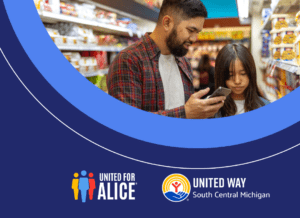
United Way’s data for ALICE (Asset Limited, Income Constrained, Employed) provided valuable perspective for the task force, which spent over a year analyzing the needs of low-income Michigan residents and developing solutions. The task force was led by the Michigan Department of Labor & Economic Opportunity.
“Creating conditions that give every Michigander access to economic opportunity and prosperity is one of the most sacred duties of government,” said Kim Trent, LEO Deputy Director for Prosperity, at the Feb. 17 news conference led by Michigan Gov. Gretchen Whitmer.
The task force had three goals: reduce the ALICE population by helping more people achieve financial stability; build intentionally collaborative programs; and address needs through a racial equity lens.
The recommendations fell into five areas, including benefits, criminal justice, economic, education, and health, housing and safety. Among them:
- Conduct an in-depth study of how Temporary Aid to Needy Families (TANF) funds are distributed. The task force said Michigan is not providing sufficient dollars to the right programs, especially compared to other states.
- Address so-called “benefits cliffs,” which are points where those in need lose critical support they need to make a full transition to self-sufficiency.
- End asset tests for food assistance.
- Increase access to programs, from economic self-sufficiency to food and nutritional programs for children.
- Address the digital divide.
- Increase funding for effective programs.
The task force will now seek legislative support on the recommendations as well as work with philanthropic organizations to drive success.
With more than four in 10 Michigan households struggling financially—including the ALICE population, which are people working but unable to make ends meet—the need for aggressive action is more important than ever, Larson said.
“United Ways are at work every day in communities across Michigan to improve conditions for ALICE,” he added. “We have the information we need to improve the lives of Michigan residents. Now it’s time to do the hard work.”